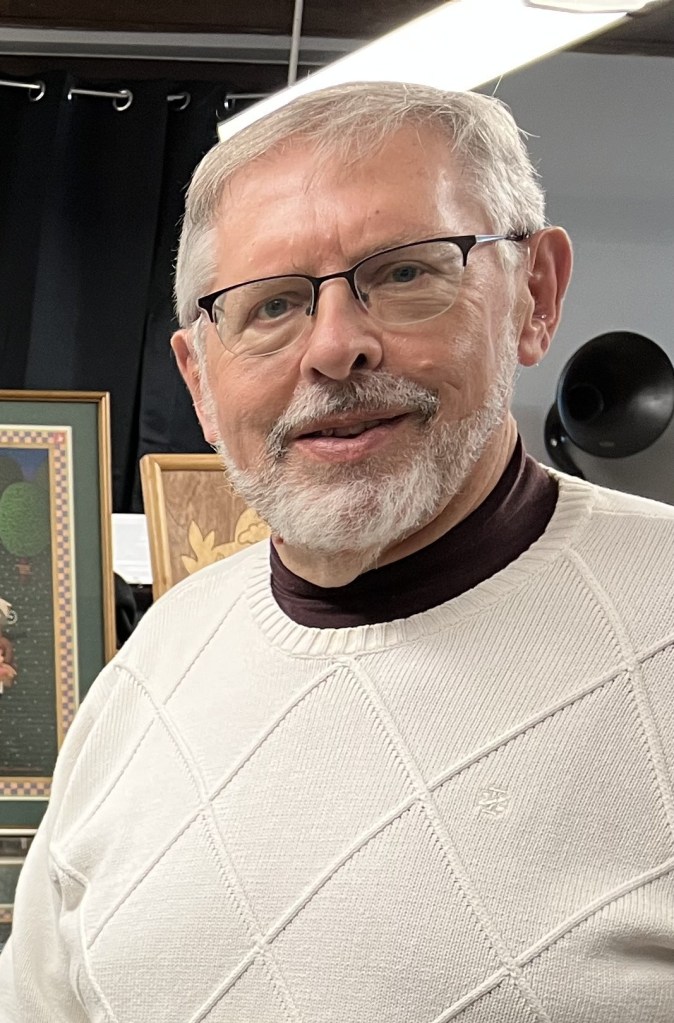
David R. Haines is a life-long Quaker having grown-up in the Quaker community of Fairview Friends Meeting, in southwestern Ohio. He is an student of Quaker business practice, having attended nine different Yearly Meetings over the years. Each Yearly Meeting has its own personality, priorities, and approaches to finding unity during work on difficult issues. It is through these experiences that his interest in how Quakers define and understand themselves has developed.
David studied Chemistry at Earlham College, and then earned his Ph.D. in Organic Chemistry in 1981 from the University of Illinois, in Champaign-Urbana. He taught Organic Chemistry at Wellesley College for 36 years, working with over two hundred undergraduate research students. Many of his students have continued their educations to become scientists and/or doctors, and many are still friends.
During his graduate school years, David discovered antiquarian bookstores and has spent the rest of his life collecting Quaker books, pamphlets, and manuscripts everywhere he has traveled. In 1986, he had the great fortune of meeting his future wife (Nancy Learned) at Sandy Spring Friends Meeting in Maryland, and she quickly adopted David’s addiction to antiquarian books. In 1988, she quit her engineering job to open an antiquarian bookstore with a subspeciality in Quaker materials, and the collection grew quickly. Twenty-five years later, David’s collection had grown to fill more than 65 bookcases. Upon retirement, David and Nancy moved, with the book collection, to North Carolina.
In part because David’s mother had grown up in North Carolina, the Quaker history of the area became a focus of interest. In researching North Carolina Yearly Meeting (NCYM) history, David transcribed the NCYM minute books, beginning with the earliest surviving Yearly Meeting minutes starting in 1708, and then moved on to the Western Quarterly Meeting minutes from its start in 1760 to 1846. The NCYM minute books mentioned the creation of the 1755 NCYM Book of Discipline, which existed only in manuscript, so David transcribed that book, and pursued its origins by transcribing and publishing the text of several of its major sources, the 1704 Philadelphia Yearly Meeting Rules of Discipline and Practice and the 1719 Philadelphia Book of Discipline with its 1747 and 1755 addenda. His first books, based on the above transcriptions, served as sources and inspiration for his third work which focuses on sources and textual bases of the early NCYM practices of discipline and and the queries that were used as guides for their community life.–
 Pleasant Green Books